
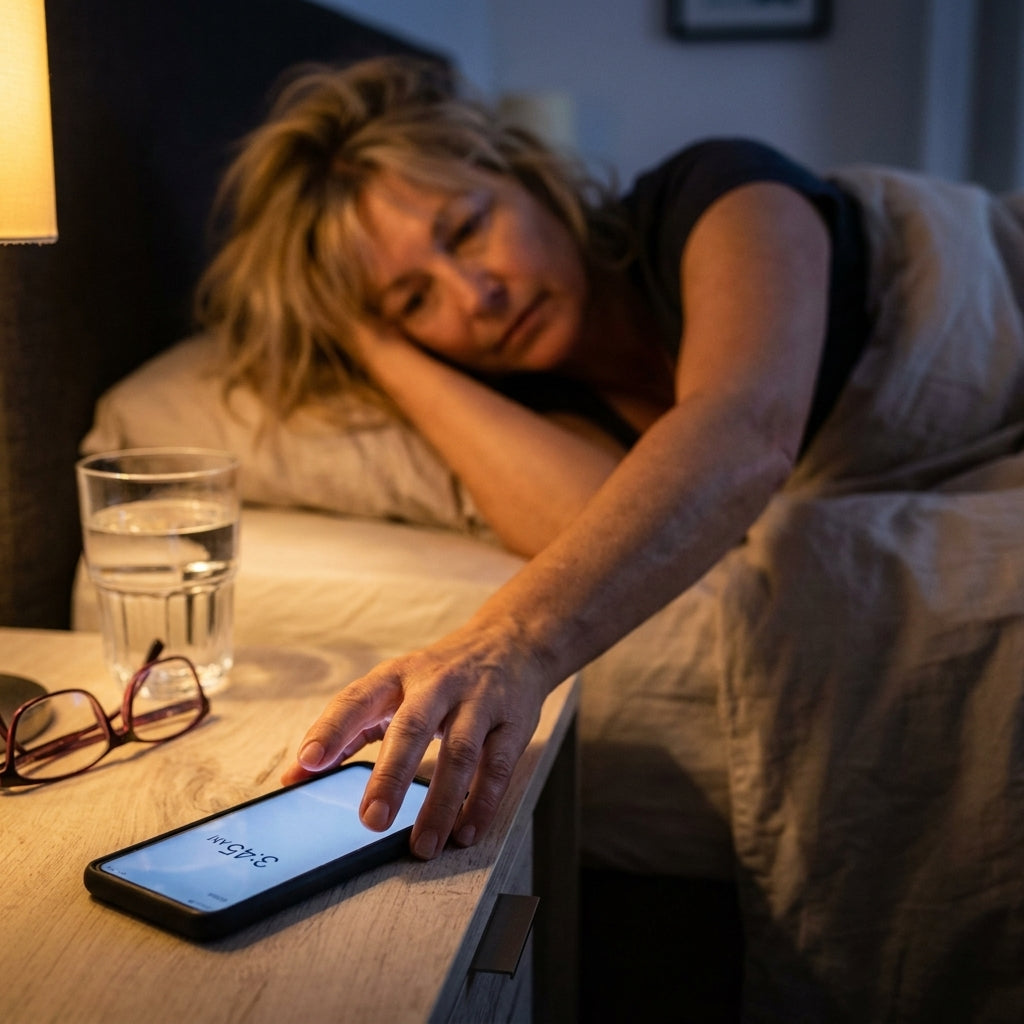
Menopause Insomnia: Why You Wake at 3AM Wired, and What Actually Helps
Sleep is one of the first things menopause disrupts and one of the last things anyone explains well. Here is what changes, why it so often continues long after periods stop, and which of the usual fixes actually hold up.
Does This Sound Like Your Night?
Most women who find this page recognize at least three. Check the ones that sound like you.
If you checked three or more, this is a recognized menopause and postmenopause pattern. It has a cause, and it is not something you have to just live with because "that is menopause."
The Problem Is Not Waking. It Is Becoming Fully Alert.
Here is the part almost nobody tells us. Waking in the night is not the malfunction. Everyone surfaces briefly through the night, several times, every night. It is a normal feature of how sleep is built. On a good night you surface, drift, and go back down without ever remembering it happened.
What changed for you is not that you started waking. It is that you started waking all the way up.
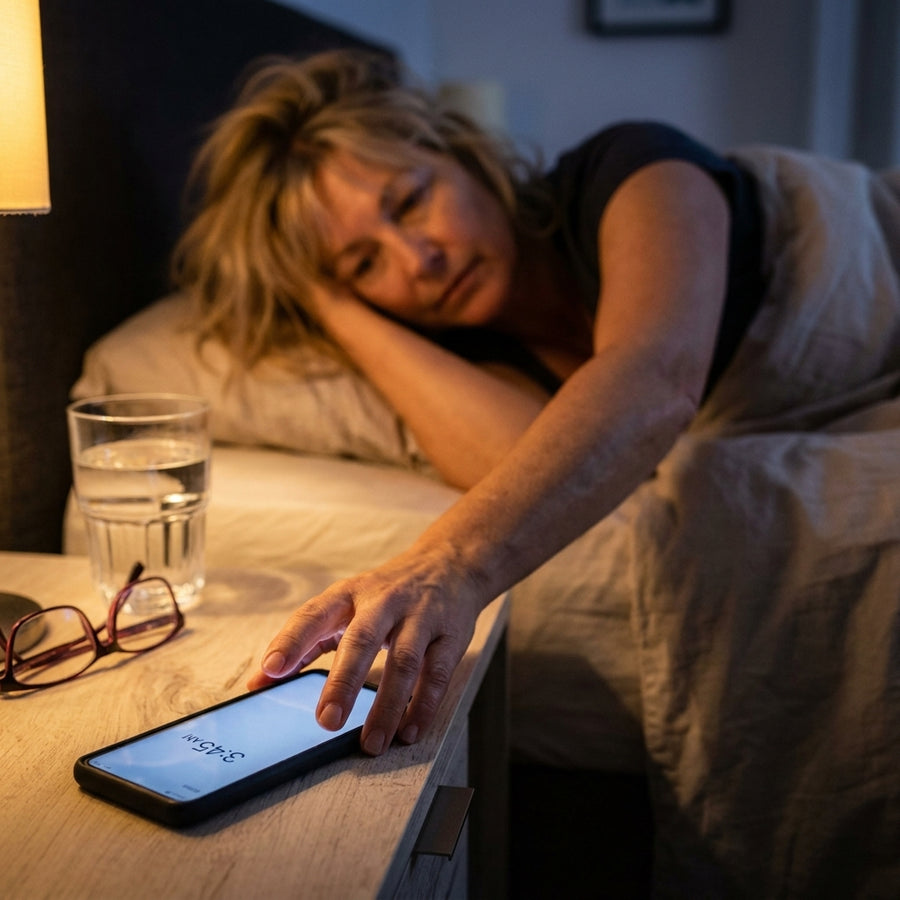
The heart going. Eyes open in the dark. Brain switched on and already three thoughts deep into something that does not matter. That is not a normal surface. That is a full alert, and once you are there, getting back down is a different problem entirely.
So there are two problems here, and they are not the same one:
This is why it is a staying-asleep and settling problem, not a falling-asleep problem, and why "just take melatonin" so often does not fix it. Melatonin is one signal at the end of a longer chain, and postmenopause the calming side stays quiet unless something supports it.
What Menopause Actually Changed
Two hormone shifts explain why the brake stopped catching you.
Progesterone stays low

Progesterone converts into allopregnanolone, which supports your brain's main calming brake, the GABA-A system. That brake is what used to settle you before you ever came fully up. In perimenopause progesterone swings. After menopause it settles low and stays there, so the brake stays weak.
Serotonin support thins, and melatonin fades

Estrogen helps your brain make serotonin, the calm-chemistry your mood and sleep both lean on. As estrogen drops, that support thins. Separately, melatonin, your sleep-timing signal, naturally declines with age through this same window. Two systems that used to steady your nights, both running lower.
This is not the only reason a woman in her forties sleeps badly. Thyroid problems, medication, stress, sleep apnea and other conditions all cause night waking, and they are worth ruling out with your doctor. But if you fall asleep fine and come up fully alert at 3am, and it tracks with when your hormones changed, this pattern fits.
What Actually Supports the Brake?
The brake has a name: a receptor system called GABA-A. Progesterone kept it responsive through a compound called allopregnanolone. No progesterone, no allopregnanolone, no brake.
You cannot rebuild that supply without a prescription. You can support the receptor directly.
But that is a narrow job, and almost nothing is built for it. Sleep formulas are built to make you drowsy. Drowsy does not reach the brake.
So the question is not what helps with sleep. It is what was built for this.
RAWFORMA™ vs. Other Brands
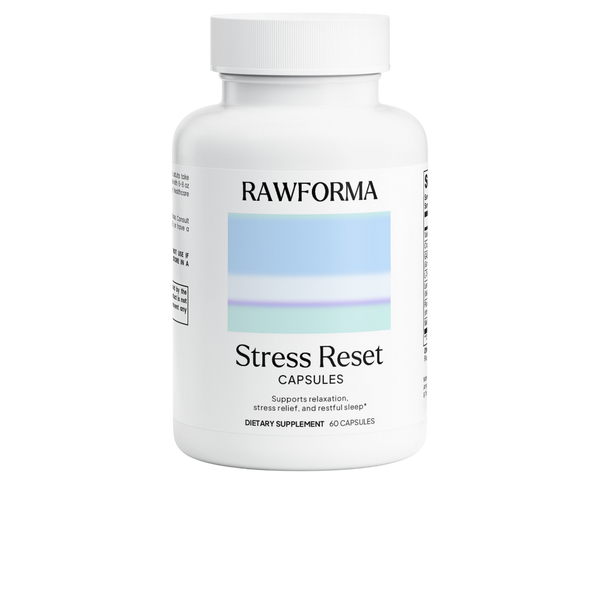

Stress Reset Night: Built for the Menopause 3AM Wake-Up, Not General Sleep


Stress Reset Night Formula
Stress Reset Night Formula
Order now and recieve by: -
Couldn't load pickup availability


TRUSTED BY WOMEN
Real Stories, Real Results
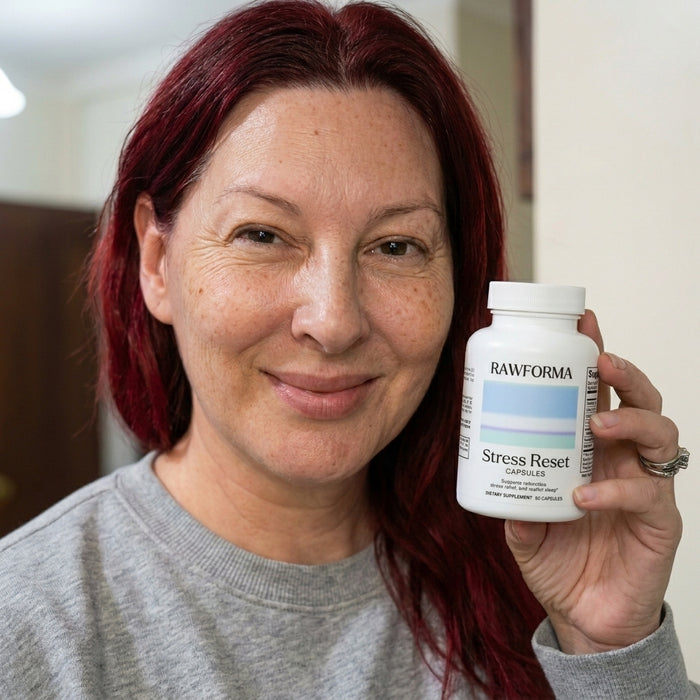
"This has been a lifesaver for calming my evening menopause symptoms. I was so tired of waking up feeling groggy and foggy from over-the-counter sleep aids. Waking up actually feeling refreshed is worth every penny."
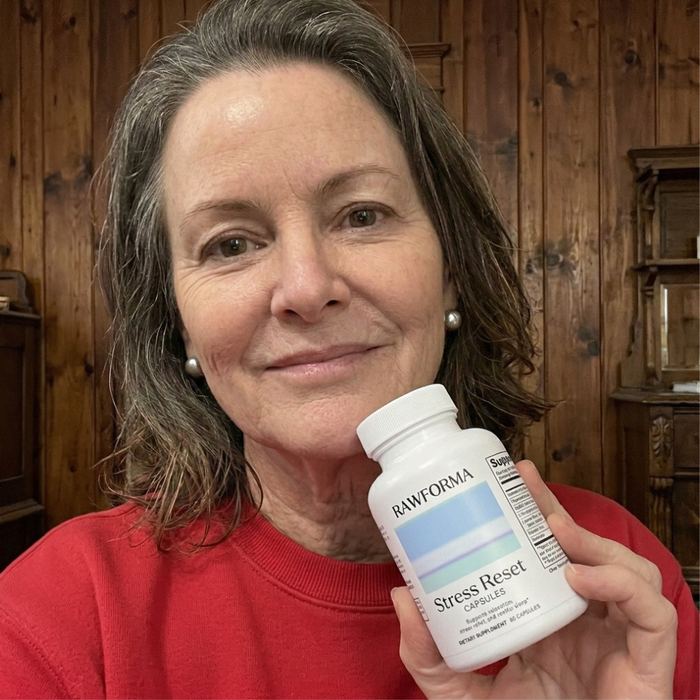
"I turn 58 next month and the night anxiety has been the worst part of perimenopause for me. My mind just races at 2am about literally nothing and my chest gets tight. started taking rawforma sleep a month ago. It doesn't knock you out cold but it quieted my brain down enough to actually drift off. such a big relief."
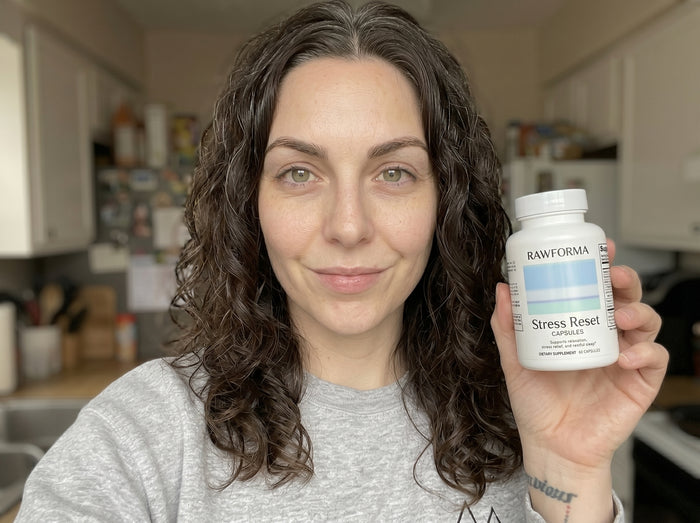
"I used to wake up at 4 AM every single night with my heart pounding for absolutely no reason. A friend recommended this, and I am genuinely surprised. I finally sleep straight through the night without the sudden panic. Such a relief."

"I’ve tried every magnesium spray and melatonin gummy out there for my perimenopause insomnia, and nothing actually kept me asleep. I was pretty skeptical about this, but within a week, the late-night overthinking just stopped. It’s like someone finally found the 'off' switch for my brain."




FAQs
How is Rawforma different from other menopause sleep supplements?
How is Rawforma different from other menopause sleep supplements?
Most menopause sleep formulas go to one of two places: hormone-balancing (a category the FDA has been increasingly skeptical of, and one most women in this category have already tried) or generic GABA-receptor support.
Rawforma names the upstream cause those formulas leave out: allopregnanolone, the metabolite of progesterone that activates your GABA-A receptor system. When progesterone collapses in perimenopause, allopregnanolone goes with it. Other formulas address the receptor. Rawforma supports the pathway that used to feed it.*
Is Rawforma a natural, over-the-counter sleep aid?
Is Rawforma a natural, over-the-counter sleep aid?
Yes — Rawforma is a drug-free, non-hormonal, over-the-counter sleep aid made specifically for perimenopausal and menopausal women, using standardized botanicals plus a low 2 mg dose of melatonin.*
How long until I see results?
How long until I see results?
Most customers report a calmer wind-down on the first night, with easier sleep onset and reduced mental chatter. Improvements in sleep quality, including deeper sleep and fewer overnight wakings, typically become noticeable within two weeks.
Will Rawforma replace my magnesium glycinate?
Will Rawforma replace my magnesium glycinate?
Magnesium glycinate does real work, but it touches the GABA system from the outside. Most women who started with magnesium found it took the edge off without resolving the 3am wake-up itself.
The botanicals in Rawforma (valerian, chamomile, lemon balm, passionflower) act directly on the GABA-A receptor system that allopregnanolone used to support.* Many of our customers keep their magnesium and add Rawforma. Some find Rawforma replaces most of the rest of the nightstand.
How long until I feel a difference?
How long until I feel a difference?
Most of our customers describe a shift in the first week: easier wind-down, less keyed-up at bedtime. The deeper change, the 3am wake-ups easing, tends to land around week three. The botanical pathway Rawforma works on doesn't reset overnight, and neither does the system that needs it. Plan for 30 days minimum.
When should I take it?
When should I take it?
30 to 45 minutes before bed, with or without food. Same time every night.
Will it make me groggy in the morning?
Will it make me groggy in the morning?
No. The 2mg melatonin dose is below the threshold most research associates with morning grogginess (that's a 5 to 10mg problem). Valerian and chamomile metabolize overnight. If you're sensitive, take it 60 to 90 minutes before bed to give it more runway.
Can I take Rawforma if I'm postmenopausal?
Can I take Rawforma if I'm postmenopausal?
Yes. The progesterone-allopregnanolone collapse doesn't reverse after your last period. The mechanism continues for the rest of your life. Many of our customers are five, ten, or more years past menopause and still using Rawforma for sleep.*
Is there progesterone in Rawforma? Or any hormones?
Is there progesterone in Rawforma? Or any hormones?
No. Rawforma isn't a hormone product and doesn't replace what your hormones used to do. The formula supports the relaxation pathway your hormones used to amplify, which is a different intervention than HRT, and compatible with it.*
Is it safe to take every night?
Is it safe to take every night?
Rawforma is formulated for nightly use. Valerian, chamomile, lemon balm, and passionflower have long traditional-use histories and modern safety data. Melatonin at 2mg is well below the doses associated with receptor desensitization in the research.
Always consult your physician or qualified healthcare provider before starting any new supplement, particularly if you are taking medication or managing a medical condition.
What if it doesn't work for me?
What if it doesn't work for me?
Your first order is covered by a 30-night money-back guarantee. If you don't notice a difference, reach out to us at help@rawforma.com and we'll refund your order in full.